Showing posts with label farmers. Show all posts

Monday, 7 December 2015

Olive oil in the Maltese islands


From amber yellow to emerald green, olive oil comes in many shades and hues. Sometimes known as ‘liquid gold’, it has been a staple in our diets for time immemorial – around 400 generations, to be exact.

The History

Indigenous to the Mediterranean region, the olive tree has played a crucial role in our diets and nourishment for around 10,000 years. It is believed, in fact, that we've picked olives from trees since the early Neolithic period, and that we started extracting this fruit’s oil some 8,000 years ago. Everyone from the Grecians to the Israelites to the Romans and the Minoans cultivated and consumed olives, and all of these milked them for their delicious and wholesome juices.

This age old tradition that pre-dates written history has survived the test of time, and nowadays, olive oil is a favourite among all the people of the world, be they Mediterranean or not. So much so, that the global production of olive oil is of over 3,200,000 tonnes per year; and it is assumed that close to 100 per cent of that is consumed each year as well.


Fun Facts About Olive Oil
  • Olive oil’s renowned health properties and aromas are due to their plant-based antioxidants called ‘polyphenols’. These are believed to be both anti-carcinogenic and anti-aging.
  • We all know that some red wines get better with age, but olive oil is a product best consumed as fresh as possible. For this reason, you should always check its harvest date.
  • It should be stored in cool, dark places with the lid firmly in place as light, heat and oxygen can destroy its chemical compound. In fact, the fridge is one of the best places to preserve its taste, colour and nutritive elements. It may solidify, but, once taken out, it will go back to being a liquid within a few minutes.
  • The notion that extra virgin olive oil (evoo) should never be heated or used for cooking is not supported by research. However one should not use EVOO for frying. During our EVOO experiences we examine this fact in more detail and discuss from where this myth originated.
  • While unfiltered olive oil may look less appetising – muddy, even – it is actually much tastier and much more nutritious than its filtered counterpart.
  • No two harvests are the same, so no two batches of olive oil can ever taste the same.
  • A certain degree of bitterness is required to ensure that the olive oil is genuine.
  • In tasting sessions, different people may taste the same olive oil differently; that is why the aroma is given more importance.
  • Proper, unfiltered olive oil contains natural fats, meaning it has a high-calorific value – but, don’t worry, they’re good fats!

Extra virgin olive oil can be easily coupled to other local ingredients

Merill & Olive Oil
Olive oil was one of the first products we discovered at Merill. This was no coincidence, however, as two of the first people we teamed up with were Charlie and Ray Vella, the hard-working farmers and owners of tan-Nixxiegha Olive Grove.

Over the years, we have made it our mission to support the farmers in our rural network, particularly those whose work is eco-friendly, thanks to the EU LEADER funded Project. This training consists of pest control and management, olive oil appreciation, and health and safety regulations when working around trees, among many others.

As part of our on-going work, we also support researchers who are rediscovering old Maltese varieties and studying their unique properties; and we help create awareness about the benefits of choosing local and unaltered food products. 


What We Offer

Should you wish to organise an Olive Oil Tasting session to find out what real, unfiltered olive oil tastes like, feel free to get in touch with us.

 
We have:

  • Professional Extra-Virgin Olive Oil Tasting – As one of newest ventures, this offers small groups the chance to sit down to a glorious olive oil tasting session that will challenge everything you think you know about the taste and smell of good olive oil.
  • Bottled Extra-Virgin Olive Oil - Bottled liquid goodness that’s of a guaranteed quality and origin.

written by WriteMeAnything.com


For more information on Merill or our Olive Oil Tasting sessions, why not drop us a line at info@merill.com or call us on +356 9944 3118? 


Monday, 11 May 2015

Viticulturists within the Merill Rural Network


Much like our forefathers believed that the stars controlled their destiny, we now know that climate and geographical regions affect the chemical composition of grapes and, in turn, of wine. The study of this science, and some might even say nature’s art, is called viticulture, and the Merill Rural Network is proud to be helping out those furthering Malta’s sector in this sphere.

Grapes are an incredibly versatile berry: They can be eaten fresh, add a burst of zingy sweetness to dishes as raisins or sultanas, and even make the anti-oxidising drink that is grape juice. But for all its worth, their best loved and most influential use remains their ability to ferment and create one of the world’s oldest alcoholic beverages... Wine.

At Merill, we champion tradition, crafts from an age that is fast disappearing, and the use of long-established practices when it comes to agriculture, but we also understand that science and new knowledge are there to help us build a more sustainable and efficacious system. And that’s where our viticulturists come in.

Meet Carmel & Paul Cortis, brothers by blood and in the field


Working the land is a backbreaking job that, more often than not, cements the bond that ties father to son, mother to daughter, and sibling to sibling. Carmel and Paul Cortis, are brothers in and out of the field, but their mutual love for viticulture has led them to develop a requited fondness that is evident in their work.

Chances are, you’ve already laid your eyes on one of the patches of land that the Cortis brothers manicure on a weekly basis. Perched just beneath the imposing, fortified city of Mdina lies their vineyard; a beautiful medley of colourful vines that contrast exceptionally well with the straw-coloured walls of the Medieval Silent City.

It’s hard to believe that this landscape was once devoid of life, and that Carmel and Paul had to reintroduce soil and plant vines when they first took up farming. They’ve come a long way since then and, through heavy investment in machinery and new technology, hard work, and pure determination, they are now the proud carers of a plantation of grapevines that bears fruit in the summer and provides greenery throughout the rest of the year.


Carmel and Paul are part-time farmers, but most of their free time is spent tending the field, along with their wives and children, who provide a helping hand whenever needed but particularly during harvesting season, when the workload is at its peak.

Meet Patrick Gauci, a man whose pastime enriches the landscape

While not many fathers expect their children to follow in their footsteps, Patrick is one who can proudly say that his influence on his son gained Malta another, much-needed agriculture graduate. At 55 years old, however, Patrick still spends a lot of his time farming, and is a person whose pastime is ‘rewarding’, ‘relaxing’ and beneficial to Malta’s grape-growing industry and the land he sows.

Situated at the foot of the ridge where Gnien l-Gharusa tal-Mosta lies, the Ghajn Rihana Vineyards yield grapes that go on to produce some of the Island’s most celebrated wines. All this, Patrick does in his free time, but he has been doing so since he was a child, and is grateful to have found someone who will take care of his land with him and also once he can no longer do it himself.


With a lifetime’s worth of experience in farming and viticulture, Patrick has a wealth of intellectual and practical knowledge in the field that is now fostered and bolstered by the EU-funded LEADER programme, secured through the Merill Rural Network.

To stay up-to-date with Carmel & Paul’s Cortis Vineyard, you can follow them on Facebook by clicking here; for Patrick’s Ghajn Rihana Vineyards, you can click here. For more information on Merill you can contact us by e-mail at info@merill.com.mt or by calling us on +356 9944 3118.

Written by WriteMeAnything.com


Wednesday, 6 May 2015

Wine & Cheese Tasting Experience


Wine is an icon that has transgressed time and tastes. So much so, that 10,000 years after the first batch of this alcoholic beverage concocted from fermented grapes was made, wine still holds an important place in our everyday lives.

Benjamin Franklin once said that ‘wine is constant proof that God loves us and loves to see us happy’. 

We agree, but we also believe that wine is more than just a simple beverage that accompanies your dinner, or which you sip as you chat to friends. After all, each bottle of wine holds within it traditions, customs, scents and tastes that have been 10,000 years in the making.

Taste Local

As many of you probably know, we are firm believers in the produce yielded and products created locally, and there are many reasons for this. 

To begin with, these are zero-milage products, meaning that their carbon footprint is much, much smaller than something imported from abroad. 

Buying and promoting these products also helps safeguard customs that have been in use for generations, and helps promote the growth of our local agricultural landscape and economy. 

But, more than that, we truly believe that local produce, aided by the kiss of our generous sun, and lovingly grown by the wonderful farmers that have dedicated their life to this practice, results in superior products that taste divine.

That’s why our Wine & Cheese Tasting sessions only make use of locally-produced wine, grown in vineyards scattered all around the Islands that benefit from our fertile soil and optimum weather conditions. And, to complement the wines and take your taste-buds on a journey through Malta’s culinary traditions, we add creamy and soft sheep’s milk gbejniet (traditional Maltese cheeselets) to our offering.


Wine & Cheese Tasting Sessions by Merill

Our Wine & Cheese Tasting Sessions take place at one of our exclusive venues, which set the stage for an idyllic afternoon in the company of expertly-picked, boutique wines and fresh gbejniet created from local milk by local producers using recipes that date back tens, and even hundreds, of years.

As we take you through the different wines and explore their fragrance, palate and origin, we also guide you through the deep and intricate taste of our humble gbejna, as well as the history and legacy of the venues we are in, which include Tas-Salut Orchard or the Tan-Nixxiegha Olive Grove.

As such, these Wine & Cheese Tasting Sessions are great for both locals and visitors, and whether it’s a birthday party, get together, team-building session, or just an afternoon spent getting to know the local viticulture, we will always welcome you with open arms.

Other Details:

As we’re sure you know, wine tasting sessions are all about getting to know the wines at hand, so we’ll make sure you won’t get drunk while in our care, and we promise to keep you safe.

These tasting sessions cannot substitute lunch or dinner in their entirety, so they make for a perfect pre-dinner activity.

They are available all year round, no matter the weather!

They’re perfect for an afternoon gathering that allows you to taste some delicious Maltese wines with a backdrop of the pink and yellow sky as the sun sets. It also means that, if you come in the hot summer months, you’ll avoid the stifling heat of the early afternoon.

Groups can secure the exclusive farm venue – drop us a line for more information about this.

Visitors will try three different kinds of wine and two types of gbejniet – making these sessions ideal for vegetarians too.


For more information on Merill or our Wine & Cheese Tasting sessions, why not drop us a line at info@merill.com.mt or call us on +356 9944 3118? 

Written by WriteMeAnything.com


Saturday, 5 May 2012

Good Vines and Wines in Malta

Hello Merill fans,

Hello!
Hope you're all doing great! Just a short update about our activities in Malta. The weather is perfect...sunny and warm in the morning and cool in the evening. Vines have now greened the valleys and hills of the Maltese countryside. We're keeping our farmers busy with agri experiences right now. Visiting Valletta and Mdina is a must if you come to Malta, and so are our experiences which take place just a few kilometers away from these well known cultural sites. In just a a matter of hours we accompany our guests at the best locations of our island. 

Our network of hard-working farmers, enables us to choose the perfect venue, be it a secluded olive grove or a vineyard with stunning views in the heart of a rural area. Here are some photos for all of you to enjoy!

Should you need more info about our alternative experiences, visit our website and send us an email on info@merillecotours.com.


Saħħa!


Jeanette
Vines have now turned the landscape in Malta green

A boy's toy!
One last strawberry... et voila!

Ready!


Wie Merill Lokale Produkte, arbeiten wir mit den lokalen Bauern, um Erfahrungen zu Einheimischen und Touristen bieten, sowie vertreibt eine breite Palette von Produkten während der Besuche auf Bauernhöfen. Unser Sortiment umfasst Olivenöl, Wein, getrockneten Tomaten, Meersalz, Zwiebeln Gewürzgurken und Honig.


Wednesday, 14 December 2011

90" Eco Seconds - #1 Mġarr: Malta's agricultural hub


What's your view about this first clip we're posting? Would you like to experience these locations?

We took these shots in Mgarr...a truly rich biodiversity hot spot. It is the village with the largest population of full time arable farmers. Many still work their land with the assistance of sons of daughters, and very often their spouses too. Things are not always plain sailing for farmers. They go through many adverse situations including drought periods, marketing challenges and work load. 

The reason why we are shooting these short clips is to raise awareness about the beauty of rural areas in Malta. I speak to many people who find it hard to understand that Malta has a lot of potential in eco and agri-tourism. Meeting real farmers and harvesting/tasting their produce is an experience that many enjoy. The fresh air of the countryside and scenic beauty give visitors a sense of space and relaxation. We are doing our best to include many hidden spots around the islands during our eco tours, surprising our guests with Malta's hidden assets. 

Our "Olive Themed Tour" and the "Malta Vine and Wine Experience" have brought about a new dimension of ecotourism in Malta. These tours are not just eco because we call them so. Real farmers are benefiting from these tours financially. They feel that their land and hard work is being appreciated. Without financial benefits, one cannot expect eco initiatives to last for a long time. We go out of our way to help farmers reach their goals and together create goods and services that make us proud to be Maltese. 

For more information about the principles we practice visit our website www.merillecotours.com 

Saturday, 10 September 2011

The Maltese Goat Breed


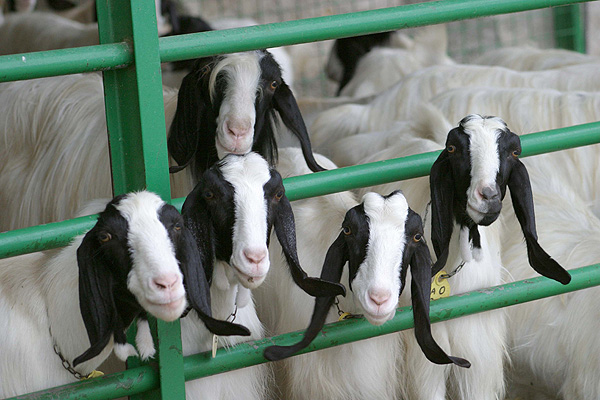
This breed is known throughout the Mediterranean and it was common for farmers from other countries such as Sardegna, to come and buy goats from Maltese farmers. The Maltese goat is typically black and is renowned for its high yield of milk. Unfortunately, at the moment, there are no 100% pure-bred goats in Malta. However one can still find them in Sardegna in Italy. The drastic decline of this breed from the Maltese Islands was the discovery of Brucellosis (Brucella melitensis) in the goat’s milk by Sir Temi Zammit. A misconception was initiated in that only goats’ milk contained the disease this urging Maltese farmers to look for other milk producing farm animals.  Infact the government of that time supported this idea by having a programme against goat rearing and proposed a scheme that gave a cow (Holstein Friesian) in exchange for five goats (1).

Maltese Goats - Photo by Salvatore Pipia
The Maltese goat has a white body with long hair, black head and large dropping ears and originated from the Middle East. This breed does not have horns. It is usually raised in small flocks of about 40 - 60 heads. Kidding occurs during the whole year, with a concentration during the months of November and February. Milk production is about 350L with a high fat and protein content, 3.8% and 3.3% respectively. Prolificity is of 180% as is considered as high. (Rubino, R.; 1993) (2).

Due to the lack of pasture land, an open yard system is commonly used for housing goats in Malta (2). Shelter needs to be provided in case of bad weather. However in countries having a higher availability of pastureland, the extensive production of goats is possible. Housing goats in the dark for several hours each day in the spring and summer months will result in an earlier estrus. Conversely, artificial lighting in the goat barn may delay estrus in autumn (6).

In Malta up to the late forties, the herdsman would take his flock round the village streets where he would milk the goat at one’s doorstep. (3) Nowadays the small portable milking machines are preferred. Milking parlors are not commonly used as the number of goats in a flock is usually small (2).

Goat milk has played an important role in human nutrition for a long time because of its nutritional and dietetic characteristics (Morand-Fehr et al., 2000). The Maltese goat as an indigenous breed, supplied households with milk and before the introduction of the Holstein Fresians, goat milk was the only source of milk. 

The importance of goat milk in infant diets is growing probably because goat milk in some cases is less allergenic than cow milk. Maltese Goat milk has often been processed into cheese. Goat cheese is of a hard-texture, made with full-cream raw milk. Curdling is carried out in woody tubs at 35 °C for 45 min by adding lamb’s rennet. The ripening ranges from a few days to some months (Rubino, 1996). Its sensorial profile is particularly appreciated among cheese tasters. An interesting study elaborated the effect of lactation on the flavour of cheese made with raw milk of Maltese goats bred in Sicily (Italy). The goat cheese flavour was analyzed for the first time by Solid Phase Microextraction (SPME) coupled with Gas chromatography/Mass Spectrometry (GC/MS) (5).

In my opinion several actions can be taken towards the improvement of the situation of this breed. The loss of such a valuable breed can mean loss of agricultural biodiversity in the island of origin, that is Malta, but also in the Mediterranean context.


Reintroduction of the breed into Malta

The modern goats breeds are said to be reproducing nicely. Although goats have done considerable damage to the local flora in the past, they are more suitable for Malta then cows which are adapted to graze on pastures, rather than the rocky hills that are more typical of the Maltese islands (1)

So far there are no plants to reintroduce the Maltese goats back to Malta. The use of goats has decreased in these years and the only goat breed one can find in Malts is mainly the Syrian, which are mainly red in colour and which used to be imported from Syria and then exported to North Africa. Although no pure-breed Maltese goats remain in Malta, one cannot exclude that some of the local goats may be closely related to the pure Maltese breed. It is a pity that having a breed with strong cultural roots is totally absent from its place of origin. The Maltese male goat is depicted on stones from the Tarxien prehistoric temple (3).

There are various initiatives which the local government can take so as to reintroduce this breed. Being a member of the European Union, we can benefit from the various funds to achieve this aim. LEADER projects and LIFE projects have aided such purposes in several countries in the past. Nonetheless such initiatives can be taken to Malta’s advantage and conserve local biodiversity (8).


Kindly acknowledge Jeanette Borg when using any part of the text in this article.
(Reference: Borg J. 2008, The Maltese goat breed)


References:

  1. Galea De Giovanni Martin; Agro-Biodiversity Campaign; Paper on Maltese Agro-Biodiversity; Friends of the Earth

  1. Blundel R.; 1994; Reintroduction of the local breeds of sheep and goats in Malta; CIHEAM; Options Mediterraneennes; Department of Agriculture, Government Farm for Research and Development; Ghammieri; Malta
  2. Busuttil Salvino; Agriculture in Malta: A Historical Note; Options Mediterraneennes; United Nations Environment Programme, Co-ordinating Unit for the Mediterranean Action Plan, Athens, Greece

  1. Gigli Isalbel, Sardina Maria T, Budelli Elena, Finocchiao Raffaella; Genetic and Protein Polymorphism at CSN1S1 Locus in Two Goat Breeds; Universita degli Studi di Palermo, Dipartimento S.En.Fi.Mi.Zo., Palermo, Italia.

  1. B. Chiofalo, A. Zumbo, R. Costa, L. Liotta, L. Mondello, P. Dugo and V. Chiofalo; Characterization of Maltese goat milk cheese flavour using SPME-GC/MS; South African Journal of Animal Science 2004, 34 (Supplement 1); South African Society for Animal Science Peer-reviewed paper: 8th International Conference on Goats

  1. Camilleri K; 2001; The economic aspects of breeding sheep and goats in Malta; Dissertation Diploma in Agricultural Sciences; University of Malta

  1. Uysal-Pala C., Y Karagul-Yuceer, Pala A. Savas T.; Sensory Properties of Drinkable yogurt made from milk of different goat breeds; Journal of sensory studies. Malden, USA: Blackwell   Publishing Inc 2006 Oct., v. 21, no. 5, p. 520-533

  1. Horst Korn, Rainer Schliep, Cordula Epple; 2005; Opportunities of EU Agricultural Policy Instruments for Biodiversity Conservation and Integrated Rural Development in Protected Areas of the New Member States; Report of the workshop convened by the German Federal Agency for Nature Conservation at the International Academy for Nature Conservation; http://www.bfn.de/fileadmin/MDB/documents/skript153.pdf

  1. G.M. Vacca, L. Chianese, A. Ghibellini, V. Carcangiu, R. Mauriello, P.P. Bini; αS1-casein genetic variants in Sarda goat breed; Dipartimento di Biologia Animale; Università di Sassari

  1. Gabina D.; Management of European Sheep and Goat Genetic Resources; Options Mediterraneennes; Mediterranean Agronomic Institute of Zaragoza; CIHEAM; Spain


Other useful links;

Heritability Estimates of Lactation Traits in Maltese Goats

Reintroduction of Maltese Sheep and Goats

Brucellosis and Maltese Goats in the Mediterranean

Characterisation of Maltese Goat milk cheese flavour

Sunday, 14 August 2011

Oh what a weekend in sunny Malta!

Storm Petrels [Photo by Chris Cachia Zammit]

Out with the boat [Photo by Christian Borg]


Band club playing in Mosta [Photo by Daniel Paul Jones]


Ready to be harvested [Photo by Christian Borg]


Summer is at its best! Sunny in the morning and cool in the evening, eight local village festas, grapes being harvested, and lovely beaches to enjoy...welcome to Malta. Some avid birdwatchers were busy capturing Storm Petrels in flight while farmers are proudly harvesting the fruits they worked for throughout the year. The sea was perfect for a swim. Hundreds of boats enjoyed the calm sea while thousands of bathers hit the shores to cool off. Another great weekend has come to an end and tomorrow Malta celebrates the Feast of The Assumption of Our Lady...a religious feast with strong cultural and traditional roots to the Maltese people.

Subscribe to mailing list for free. Members are eligible for some great offers.