Showing posts with label Mediterranean. Show all posts

Monday, 7 December 2015

Olive oil in the Maltese islands


From amber yellow to emerald green, olive oil comes in many shades and hues. Sometimes known as ‘liquid gold’, it has been a staple in our diets for time immemorial – around 400 generations, to be exact.

The History

Indigenous to the Mediterranean region, the olive tree has played a crucial role in our diets and nourishment for around 10,000 years. It is believed, in fact, that we've picked olives from trees since the early Neolithic period, and that we started extracting this fruit’s oil some 8,000 years ago. Everyone from the Grecians to the Israelites to the Romans and the Minoans cultivated and consumed olives, and all of these milked them for their delicious and wholesome juices.

This age old tradition that pre-dates written history has survived the test of time, and nowadays, olive oil is a favourite among all the people of the world, be they Mediterranean or not. So much so, that the global production of olive oil is of over 3,200,000 tonnes per year; and it is assumed that close to 100 per cent of that is consumed each year as well.


Fun Facts About Olive Oil
  • Olive oil’s renowned health properties and aromas are due to their plant-based antioxidants called ‘polyphenols’. These are believed to be both anti-carcinogenic and anti-aging.
  • We all know that some red wines get better with age, but olive oil is a product best consumed as fresh as possible. For this reason, you should always check its harvest date.
  • It should be stored in cool, dark places with the lid firmly in place as light, heat and oxygen can destroy its chemical compound. In fact, the fridge is one of the best places to preserve its taste, colour and nutritive elements. It may solidify, but, once taken out, it will go back to being a liquid within a few minutes.
  • The notion that extra virgin olive oil (evoo) should never be heated or used for cooking is not supported by research. However one should not use EVOO for frying. During our EVOO experiences we examine this fact in more detail and discuss from where this myth originated.
  • While unfiltered olive oil may look less appetising – muddy, even – it is actually much tastier and much more nutritious than its filtered counterpart.
  • No two harvests are the same, so no two batches of olive oil can ever taste the same.
  • A certain degree of bitterness is required to ensure that the olive oil is genuine.
  • In tasting sessions, different people may taste the same olive oil differently; that is why the aroma is given more importance.
  • Proper, unfiltered olive oil contains natural fats, meaning it has a high-calorific value – but, don’t worry, they’re good fats!

Extra virgin olive oil can be easily coupled to other local ingredients

Merill & Olive Oil
Olive oil was one of the first products we discovered at Merill. This was no coincidence, however, as two of the first people we teamed up with were Charlie and Ray Vella, the hard-working farmers and owners of tan-Nixxiegha Olive Grove.

Over the years, we have made it our mission to support the farmers in our rural network, particularly those whose work is eco-friendly, thanks to the EU LEADER funded Project. This training consists of pest control and management, olive oil appreciation, and health and safety regulations when working around trees, among many others.

As part of our on-going work, we also support researchers who are rediscovering old Maltese varieties and studying their unique properties; and we help create awareness about the benefits of choosing local and unaltered food products. 


What We Offer

Should you wish to organise an Olive Oil Tasting session to find out what real, unfiltered olive oil tastes like, feel free to get in touch with us.

 
We have:

  • Professional Extra-Virgin Olive Oil Tasting – As one of newest ventures, this offers small groups the chance to sit down to a glorious olive oil tasting session that will challenge everything you think you know about the taste and smell of good olive oil.
  • Bottled Extra-Virgin Olive Oil - Bottled liquid goodness that’s of a guaranteed quality and origin.

written by WriteMeAnything.com


For more information on Merill or our Olive Oil Tasting sessions, why not drop us a line at info@merill.com or call us on +356 9944 3118? 


Tuesday, 1 May 2012

German Agriculturalists Training in Malta

Display of agricultural products from Malta

Anzeige von landwirtschaftlichen Erzeugnissen aus Malta

Explanation about the location

Erklärung über den Standort

Visiting small fields where Mediterranean fruit trees are grown

Visiting kleine Felder, auf denen mediterrane Obstbäume angebaut werden


Saturday, 11 February 2012

Our Principles and Our Role

Hey Merill fans!

Winter is still kicking here in Malta. It's snowing all over Italy, and also in Sicily and Lampedusa. Seems like we're the lucky ones in the middle of the Mediterranean to be left without snow. Heavy rain and hail featured the weather news in Malta almost everyday during this week. We were only blessed with one day of sunshine and look forward to more sunny days.

We thought of featuring the "Principles of Ecotourism" in today's blog article as it will be the topic highlighted during a workshop we're holding on Sunday 19th February in Malta. By popular demand we are organising this event to create awareness and meet our fans. "Ecotourism in Malta....Yes it's happening!" is the name we gave to this event, as we feel that the concept is gaining grounds and there are still many benefits we can reap from this niche market.


There are many definitions that have been given to Ecotourism, but definitely the one of the International Ecotourism Society, is the simplest and most straight forward. 


The Definition
Ecotourism is defined as "responsible travel to natural areas that conserves the environment and improves the well-being of local people." (TIES, 1990)


Furthermore, a set of principles need to be followed to contribute towards the environment, local people and society at large.


Principles of Ecotourism
  • Minimize impact.
  • Build environmental and cultural awareness and respect.
  • Provide positive experiences for both visitors and hosts.
  • Provide direct financial benefits for conservation.
  • Provide financial benefits and empowerment for local people.
  • Raise sensitivity to host countries' political, environmental, and social climate.
Reference: The International Ecotourism Society


To know more about how we are putting into practice these principles, come and join us on Sunday 19th February. Booking are still open however hurry up as places are limited. The group size will be limited. For more information contact us on info@merillecotours.com or visit our Facebook page.


Saturday, 10 September 2011

The Maltese Goat Breed


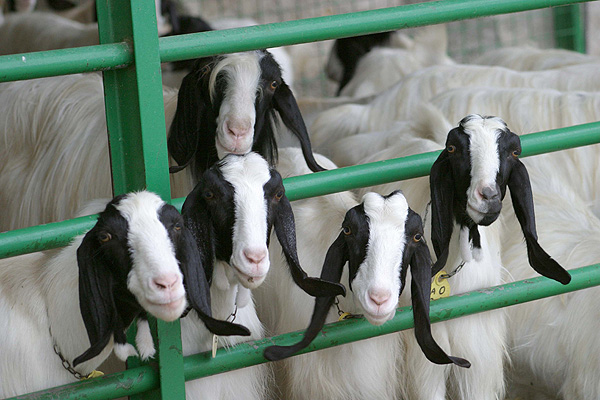
This breed is known throughout the Mediterranean and it was common for farmers from other countries such as Sardegna, to come and buy goats from Maltese farmers. The Maltese goat is typically black and is renowned for its high yield of milk. Unfortunately, at the moment, there are no 100% pure-bred goats in Malta. However one can still find them in Sardegna in Italy. The drastic decline of this breed from the Maltese Islands was the discovery of Brucellosis (Brucella melitensis) in the goat’s milk by Sir Temi Zammit. A misconception was initiated in that only goats’ milk contained the disease this urging Maltese farmers to look for other milk producing farm animals.  Infact the government of that time supported this idea by having a programme against goat rearing and proposed a scheme that gave a cow (Holstein Friesian) in exchange for five goats (1).

Maltese Goats - Photo by Salvatore Pipia
The Maltese goat has a white body with long hair, black head and large dropping ears and originated from the Middle East. This breed does not have horns. It is usually raised in small flocks of about 40 - 60 heads. Kidding occurs during the whole year, with a concentration during the months of November and February. Milk production is about 350L with a high fat and protein content, 3.8% and 3.3% respectively. Prolificity is of 180% as is considered as high. (Rubino, R.; 1993) (2).

Due to the lack of pasture land, an open yard system is commonly used for housing goats in Malta (2). Shelter needs to be provided in case of bad weather. However in countries having a higher availability of pastureland, the extensive production of goats is possible. Housing goats in the dark for several hours each day in the spring and summer months will result in an earlier estrus. Conversely, artificial lighting in the goat barn may delay estrus in autumn (6).

In Malta up to the late forties, the herdsman would take his flock round the village streets where he would milk the goat at one’s doorstep. (3) Nowadays the small portable milking machines are preferred. Milking parlors are not commonly used as the number of goats in a flock is usually small (2).

Goat milk has played an important role in human nutrition for a long time because of its nutritional and dietetic characteristics (Morand-Fehr et al., 2000). The Maltese goat as an indigenous breed, supplied households with milk and before the introduction of the Holstein Fresians, goat milk was the only source of milk. 

The importance of goat milk in infant diets is growing probably because goat milk in some cases is less allergenic than cow milk. Maltese Goat milk has often been processed into cheese. Goat cheese is of a hard-texture, made with full-cream raw milk. Curdling is carried out in woody tubs at 35 °C for 45 min by adding lamb’s rennet. The ripening ranges from a few days to some months (Rubino, 1996). Its sensorial profile is particularly appreciated among cheese tasters. An interesting study elaborated the effect of lactation on the flavour of cheese made with raw milk of Maltese goats bred in Sicily (Italy). The goat cheese flavour was analyzed for the first time by Solid Phase Microextraction (SPME) coupled with Gas chromatography/Mass Spectrometry (GC/MS) (5).

In my opinion several actions can be taken towards the improvement of the situation of this breed. The loss of such a valuable breed can mean loss of agricultural biodiversity in the island of origin, that is Malta, but also in the Mediterranean context.


Reintroduction of the breed into Malta

The modern goats breeds are said to be reproducing nicely. Although goats have done considerable damage to the local flora in the past, they are more suitable for Malta then cows which are adapted to graze on pastures, rather than the rocky hills that are more typical of the Maltese islands (1)

So far there are no plants to reintroduce the Maltese goats back to Malta. The use of goats has decreased in these years and the only goat breed one can find in Malts is mainly the Syrian, which are mainly red in colour and which used to be imported from Syria and then exported to North Africa. Although no pure-breed Maltese goats remain in Malta, one cannot exclude that some of the local goats may be closely related to the pure Maltese breed. It is a pity that having a breed with strong cultural roots is totally absent from its place of origin. The Maltese male goat is depicted on stones from the Tarxien prehistoric temple (3).

There are various initiatives which the local government can take so as to reintroduce this breed. Being a member of the European Union, we can benefit from the various funds to achieve this aim. LEADER projects and LIFE projects have aided such purposes in several countries in the past. Nonetheless such initiatives can be taken to Malta’s advantage and conserve local biodiversity (8).


Kindly acknowledge Jeanette Borg when using any part of the text in this article.
(Reference: Borg J. 2008, The Maltese goat breed)


References:

  1. Galea De Giovanni Martin; Agro-Biodiversity Campaign; Paper on Maltese Agro-Biodiversity; Friends of the Earth

  1. Blundel R.; 1994; Reintroduction of the local breeds of sheep and goats in Malta; CIHEAM; Options Mediterraneennes; Department of Agriculture, Government Farm for Research and Development; Ghammieri; Malta
  2. Busuttil Salvino; Agriculture in Malta: A Historical Note; Options Mediterraneennes; United Nations Environment Programme, Co-ordinating Unit for the Mediterranean Action Plan, Athens, Greece

  1. Gigli Isalbel, Sardina Maria T, Budelli Elena, Finocchiao Raffaella; Genetic and Protein Polymorphism at CSN1S1 Locus in Two Goat Breeds; Universita degli Studi di Palermo, Dipartimento S.En.Fi.Mi.Zo., Palermo, Italia.

  1. B. Chiofalo, A. Zumbo, R. Costa, L. Liotta, L. Mondello, P. Dugo and V. Chiofalo; Characterization of Maltese goat milk cheese flavour using SPME-GC/MS; South African Journal of Animal Science 2004, 34 (Supplement 1); South African Society for Animal Science Peer-reviewed paper: 8th International Conference on Goats

  1. Camilleri K; 2001; The economic aspects of breeding sheep and goats in Malta; Dissertation Diploma in Agricultural Sciences; University of Malta

  1. Uysal-Pala C., Y Karagul-Yuceer, Pala A. Savas T.; Sensory Properties of Drinkable yogurt made from milk of different goat breeds; Journal of sensory studies. Malden, USA: Blackwell   Publishing Inc 2006 Oct., v. 21, no. 5, p. 520-533

  1. Horst Korn, Rainer Schliep, Cordula Epple; 2005; Opportunities of EU Agricultural Policy Instruments for Biodiversity Conservation and Integrated Rural Development in Protected Areas of the New Member States; Report of the workshop convened by the German Federal Agency for Nature Conservation at the International Academy for Nature Conservation; http://www.bfn.de/fileadmin/MDB/documents/skript153.pdf

  1. G.M. Vacca, L. Chianese, A. Ghibellini, V. Carcangiu, R. Mauriello, P.P. Bini; αS1-casein genetic variants in Sarda goat breed; Dipartimento di Biologia Animale; Università di Sassari

  1. Gabina D.; Management of European Sheep and Goat Genetic Resources; Options Mediterraneennes; Mediterranean Agronomic Institute of Zaragoza; CIHEAM; Spain


Other useful links;

Heritability Estimates of Lactation Traits in Maltese Goats

Reintroduction of Maltese Sheep and Goats

Brucellosis and Maltese Goats in the Mediterranean

Characterisation of Maltese Goat milk cheese flavour

Thursday, 9 June 2011

Wild Thyme turns landscape purple

Wild thyme dominates some of the garigue habitat in Malta, Gozo and Comino. It spreads all around an ecosystem that looks barren and yet is very rich in biodiversity. The sun and sea are valid reasons to come to Malta. How about visiting the islands to enjoy nature? Yes we do have nature here in Malta. The diving industry has been going strong for years. Activities on land are picking up and since we started up Merill Eco Tours people ask us, "but what can one do on barren land". Our answer would be "Believe us, there is so much we can offer!!"

For those nature lovers who want to experience the heart of the Mediterranean, I strongly suggest you follow one of our eco tours! The way the nature merges with history and traditions is amazing. The photos in this post portray Wild Thyme, an aromatic herb. Bees forage on such plants to create excellent honey. Walking is not the only activity one can do and let's face it...we won't be doing ecotourism if we would organise just walks! Ecotourism is about conservation and bringing about positive experiences even for the hosts, in this case the farmers, who are always pleased to accept us on their land to directly witness their passion.

We are offering packages with fresh ideas for various tourism sectors. Do not hesitate to contact us on info@merillecotours.com for further details.

Subscribe to mailing list for free. Members are eligible for some great offers.